The Alexander Institute
for Conservation Leadership and the Sciences at Maryville College
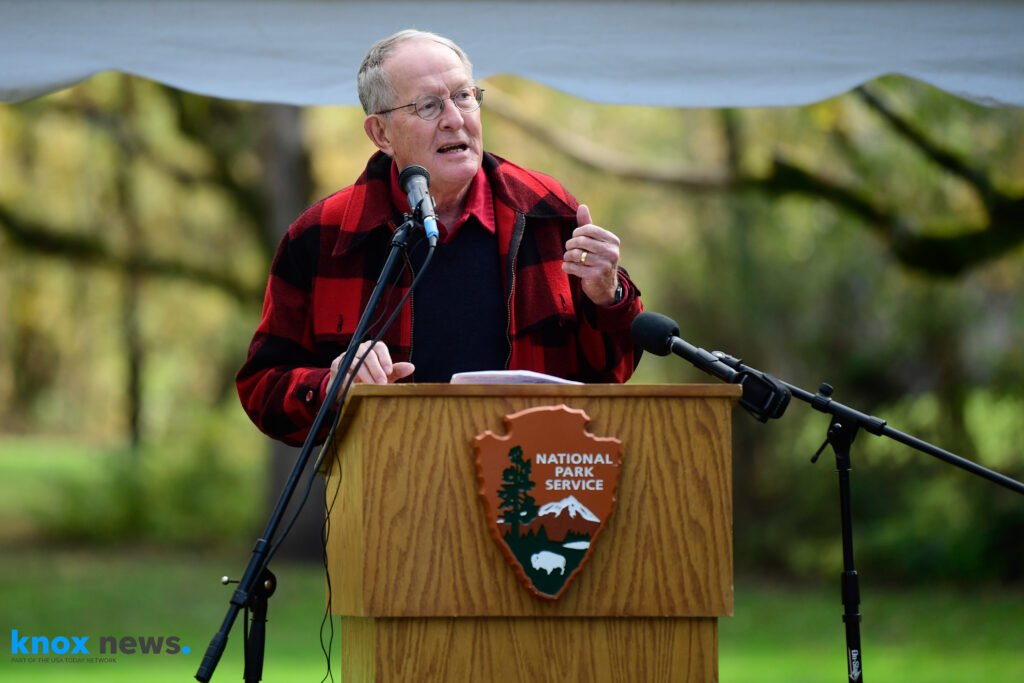
“I grew up thinking conservation was mostly about preserving scenic views. It took me a while to realize it’s really about health, clean water, economic stability, and even national resilience.”
— Lamar Alexander
In recognition of the legacy of Lamar Alexander, the Alexander Institute for Conservation Leadership and the Sciences at Maryville College will celebrate and strengthen Southern Appalachia, by promoting community engagement and understanding on issues impacting the overall health and wellness of the region.
Dear Friends,
For over 200 years, Maryville College – the institution of my hometown and where my parents first met – has been “of and for” the Great Smoky Mountains and Southern Appalachia. In recent years, the College has renewed and enhanced its commitment to this remarkable region, embracing its irreplaceable academic geography, including both the challenges and opportunities it presents.
The Alexander Institute for Conservation Leadership and the Sciences offers an opportunity to create a new model for comprehensive conservation education in a place that The Nature Conservancy has designated as one of our planet’s most biodiverse and important areas. We are creating a hub where education, research and community come together in Appalachia – not in parallel, but in partnership—to create a new generation of leaders for the Great American Outdoors.
I encourage you to learn about and to join us in supporting the Alexander Institute. You can be part of the solution to some of the most crucial questions of our time and help to conserve and protect this special region for future generations.
Sincerely,
Lamar Alexander
Interpreting the Smokies
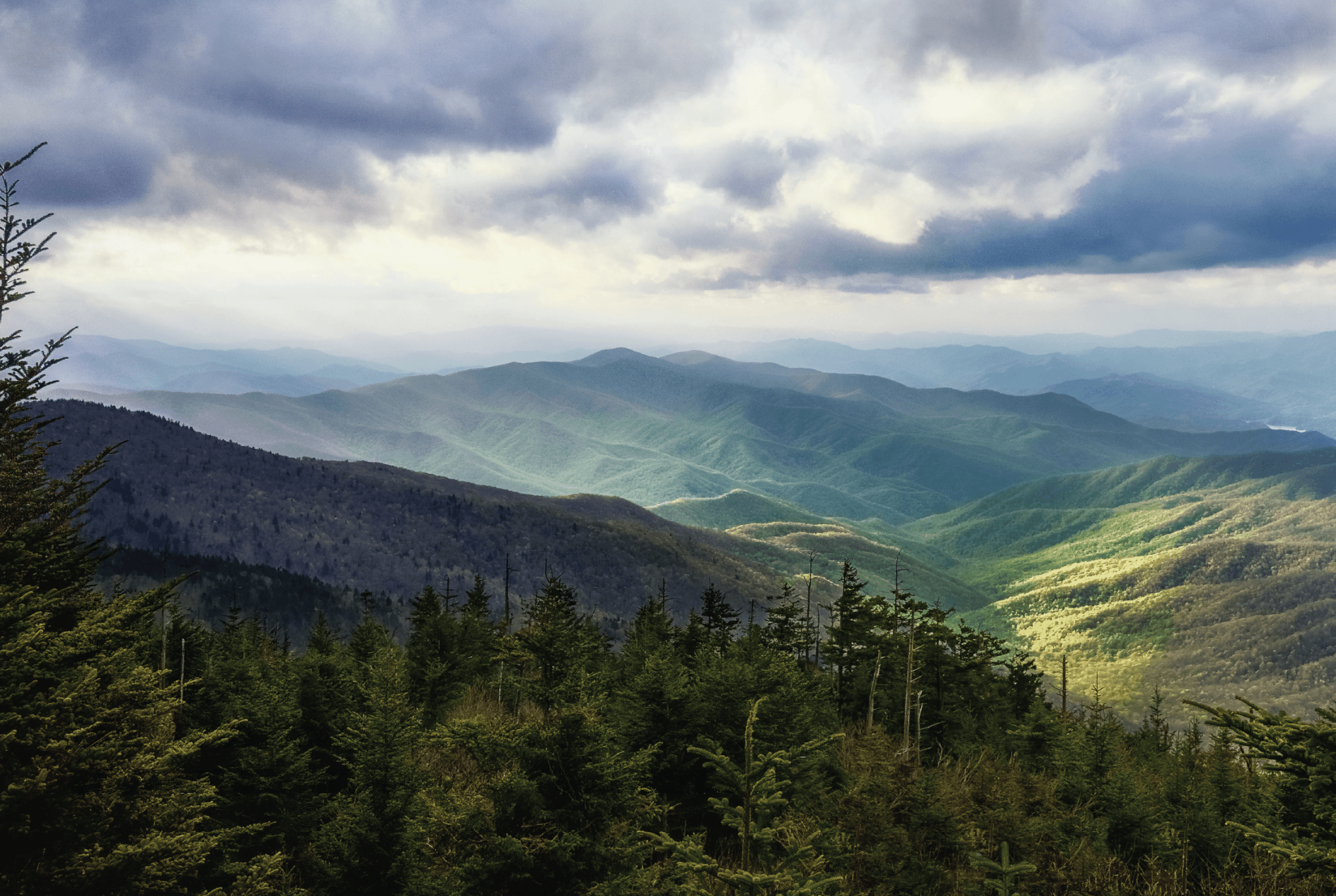
The Great Smoky Mountains, ever-present on the horizon, are a perpetual reminder of the unique beauty of Southern Appalachia. Shaped over the millennia by shifting tectonics and awesome natural forces, the landforms of the region are an inspiration to us all, and the building quietly acknowledges them with its silhouette.
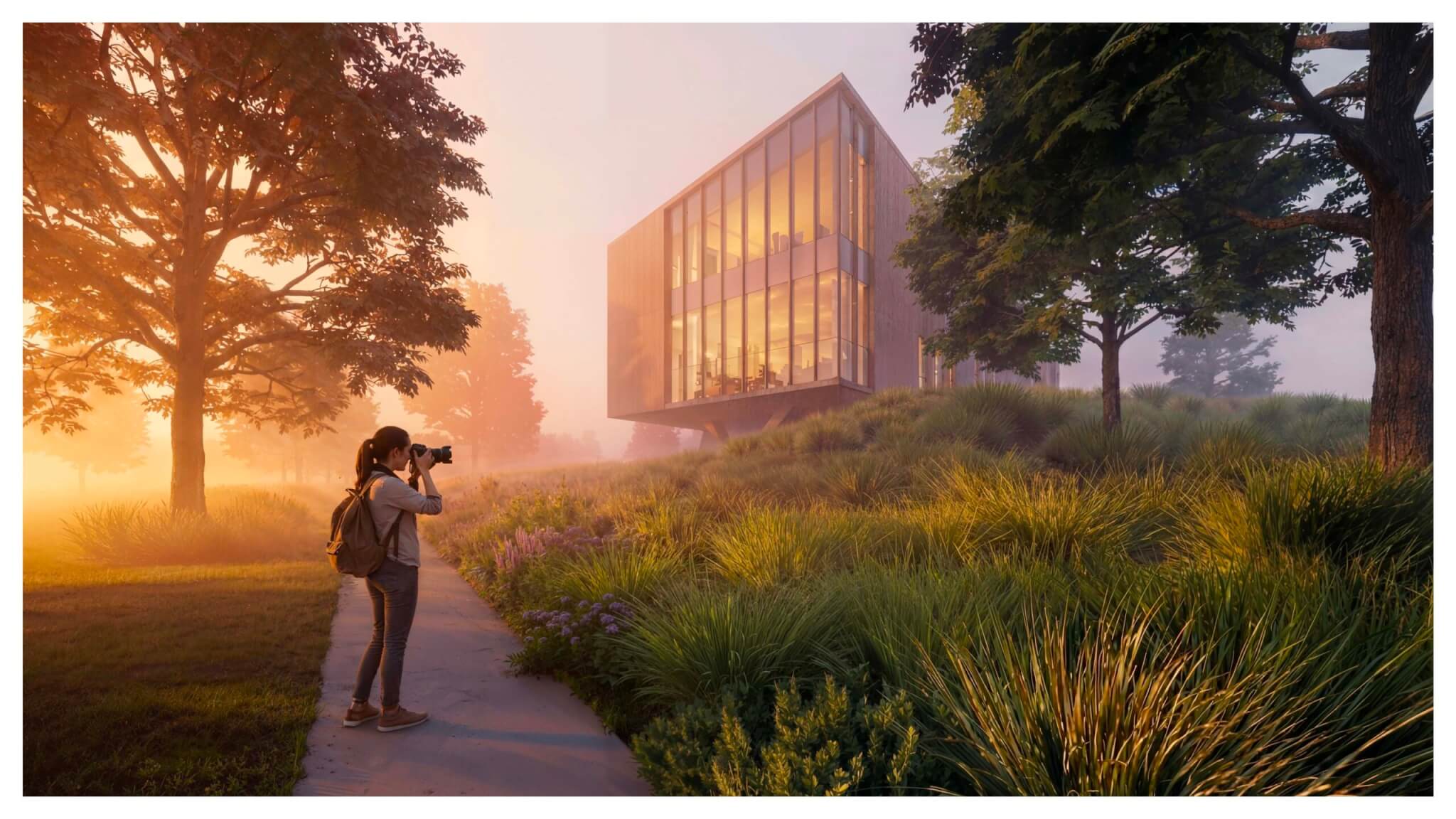
Creating an Icon
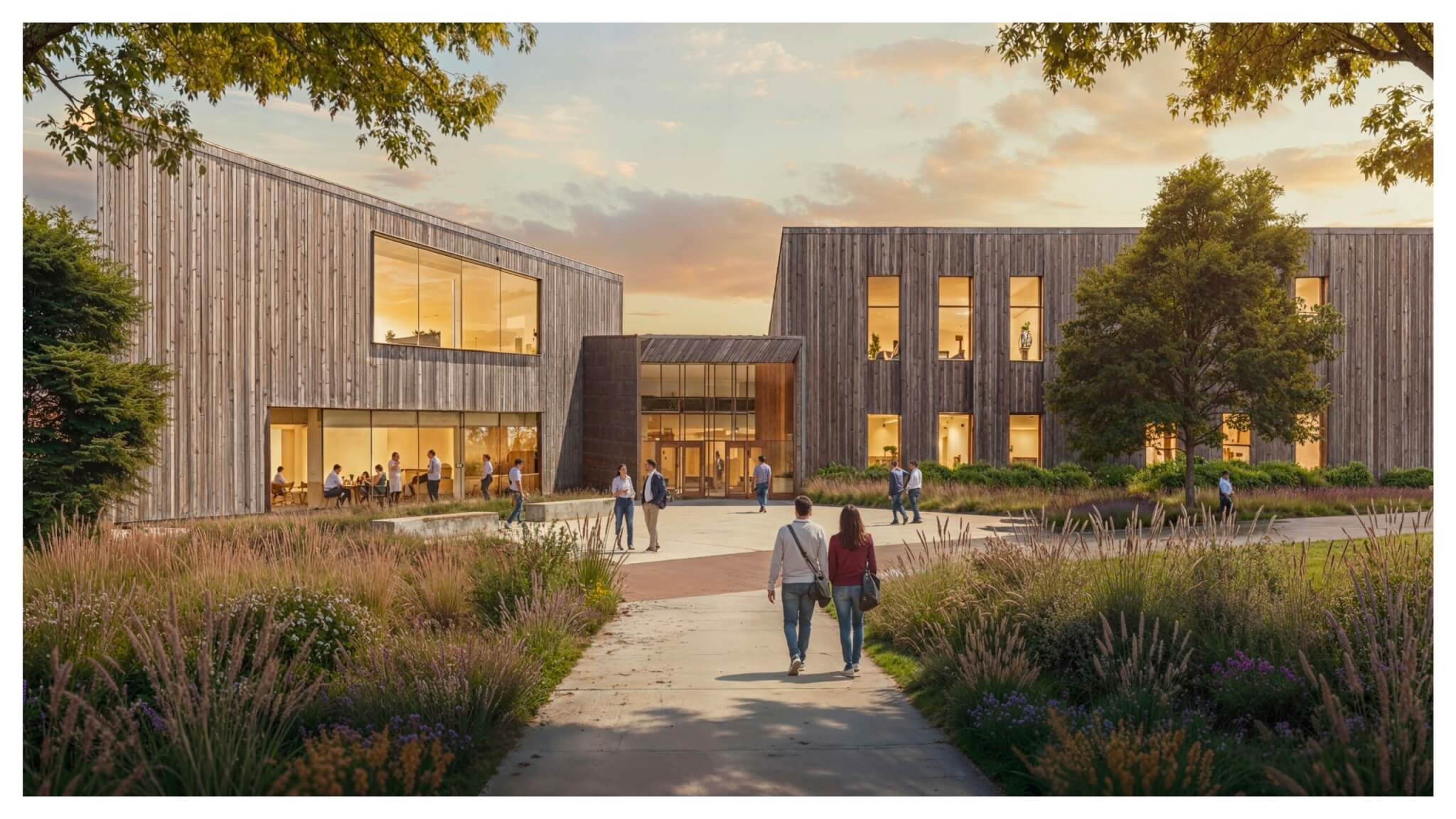
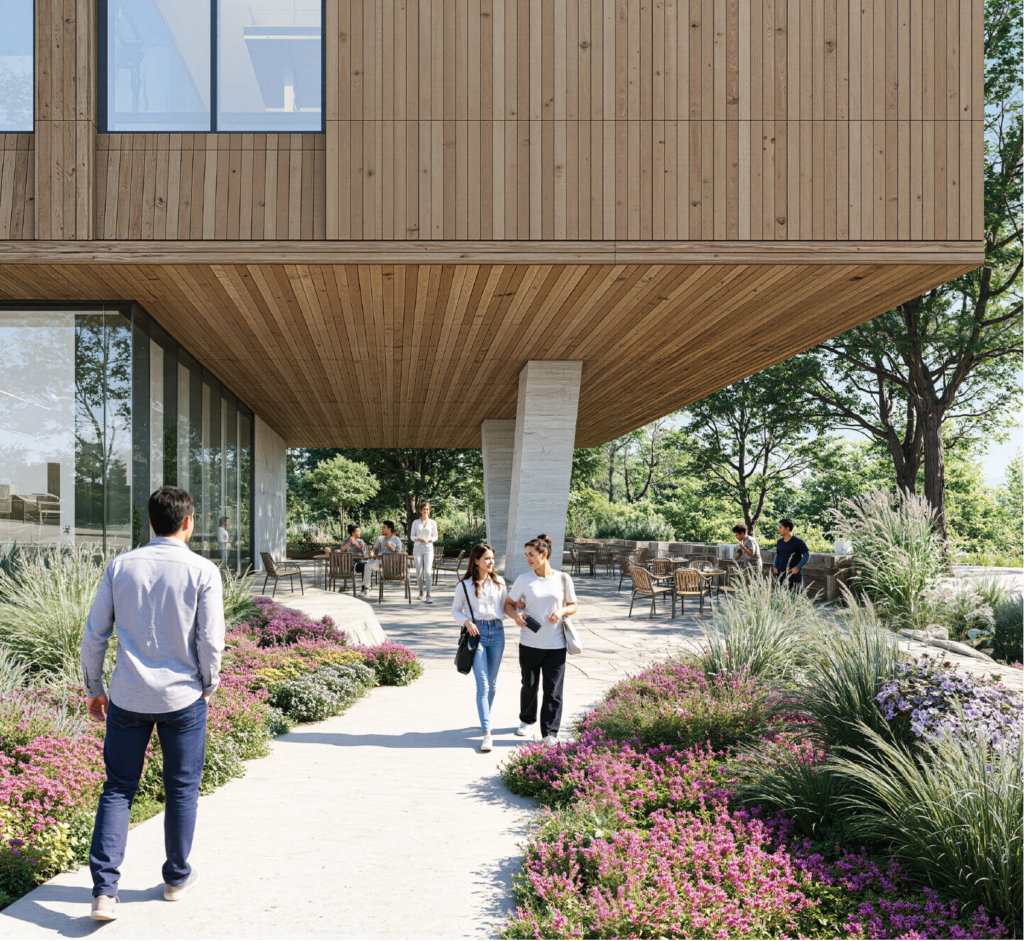
The beautiful, cantilevered barns of East Tennessee are found nowhere else in the country. These humble wood structures are a pure expression of the deep relationship the people of the region have formed with the land. The wood-clad Alexander Institute proudly reinterprets the noble barn as a learning laboratory, with an iconic cantilever marking the threshold between town and campus.
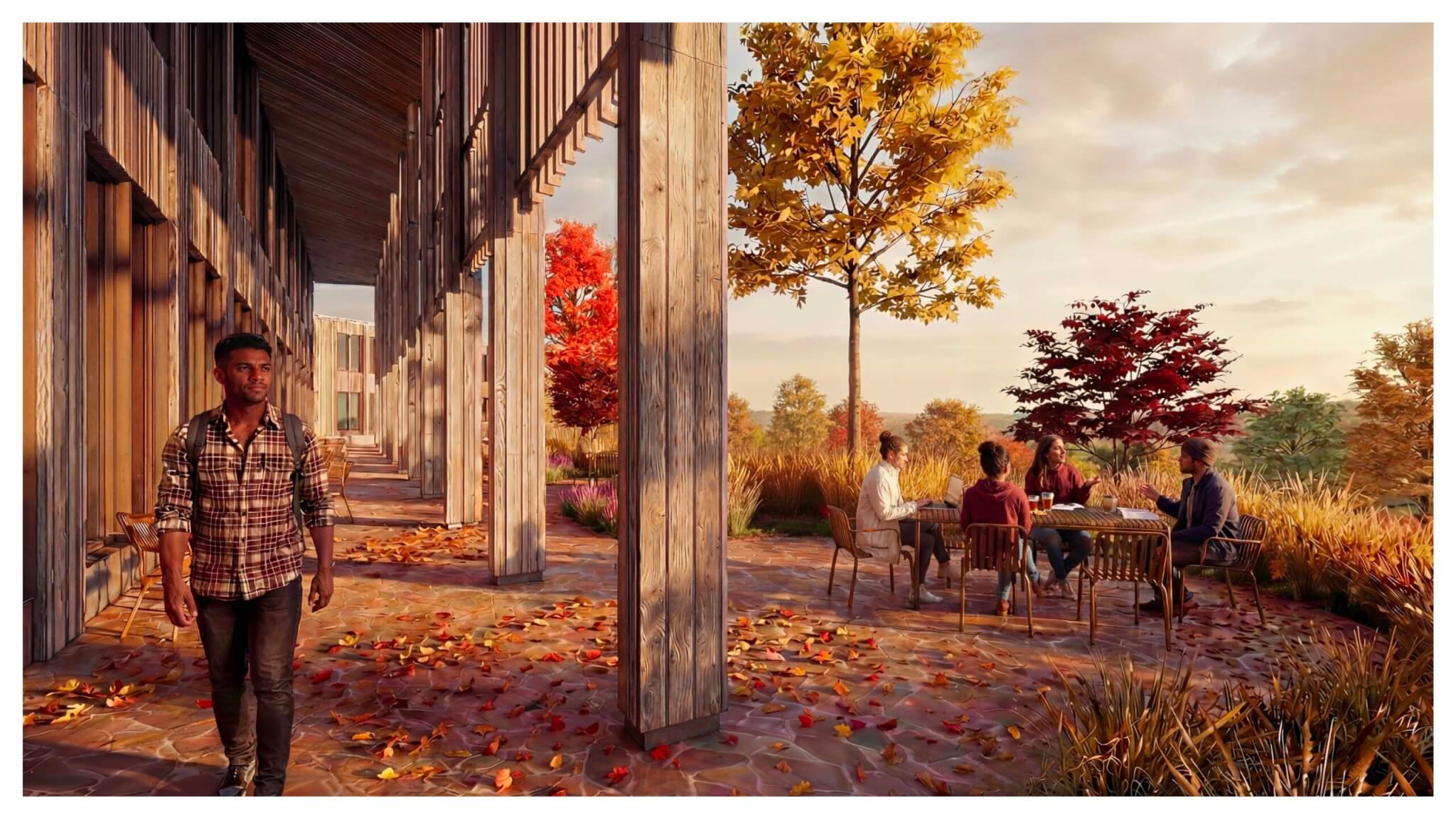
Welcoming the World
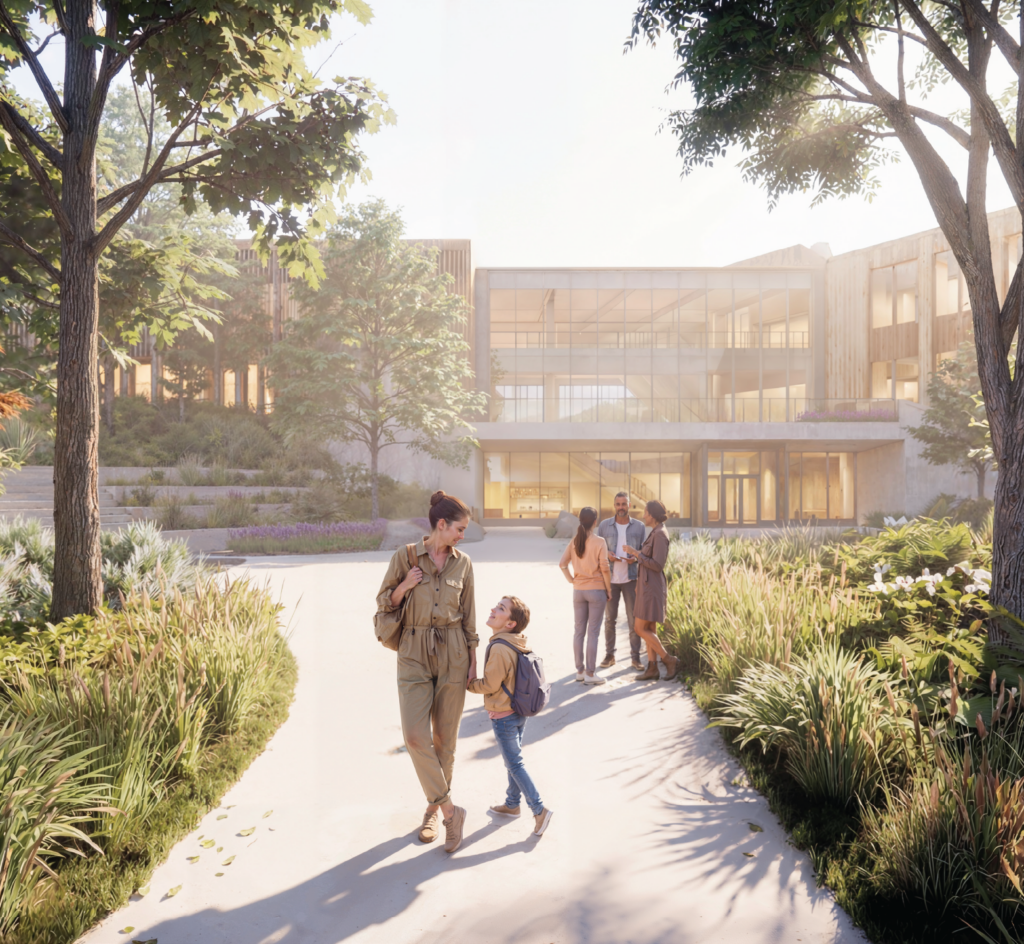
Southerners are known for their hospitality, and there is no more welcoming gesture than a front porch. The Alexander Institute, situated at the entrance to campus, envelops the site with two “arms” that embrace the city of Maryville and the world beyond. This embrace is embellished with a shaded front porch full of places for casual interaction between campus and community.
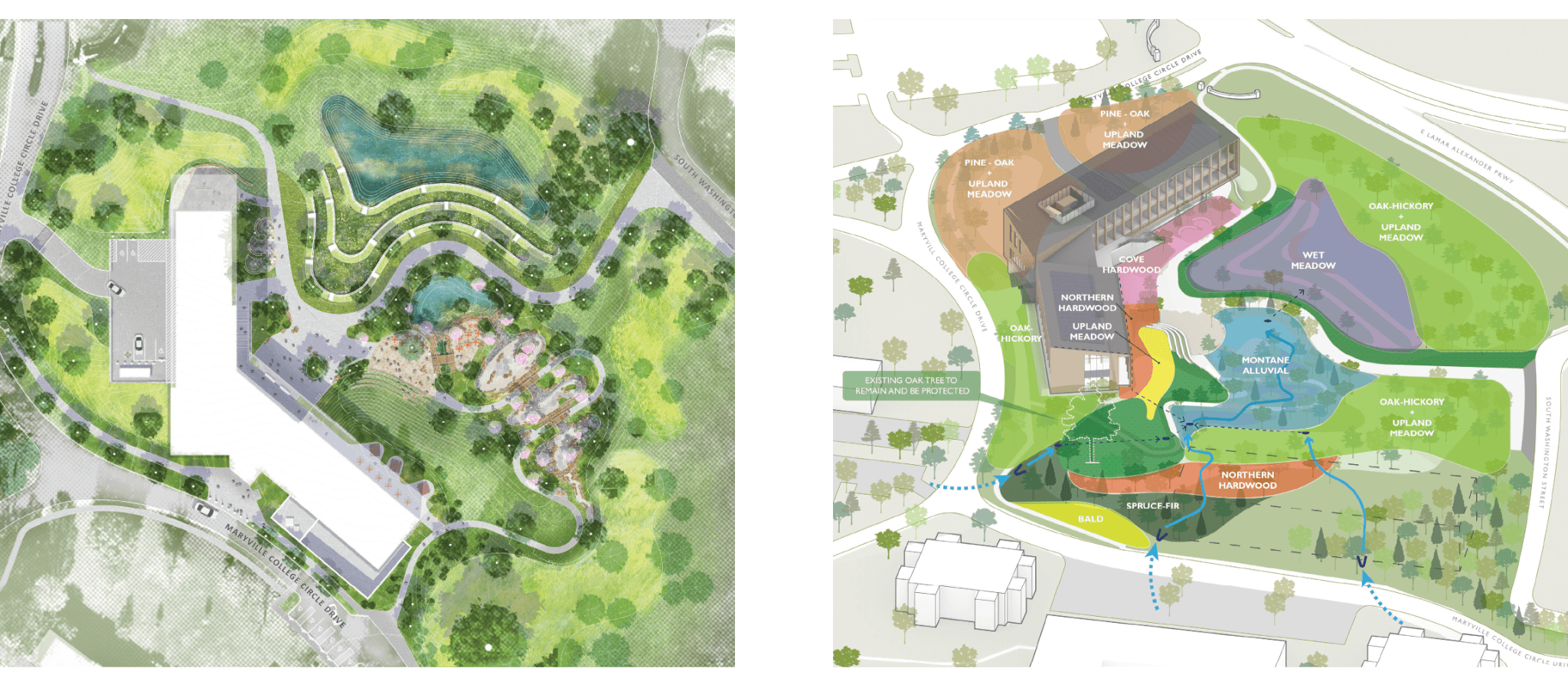
Honoring the Land
The landscape embodies the mission of the Alexander Institute and is the origin of its story. It is shaped by the same forces that inspire the architecture: the landforms of Southern Appalachia, the region’s varied ecotones, and the enduring relationship between its people and the land.
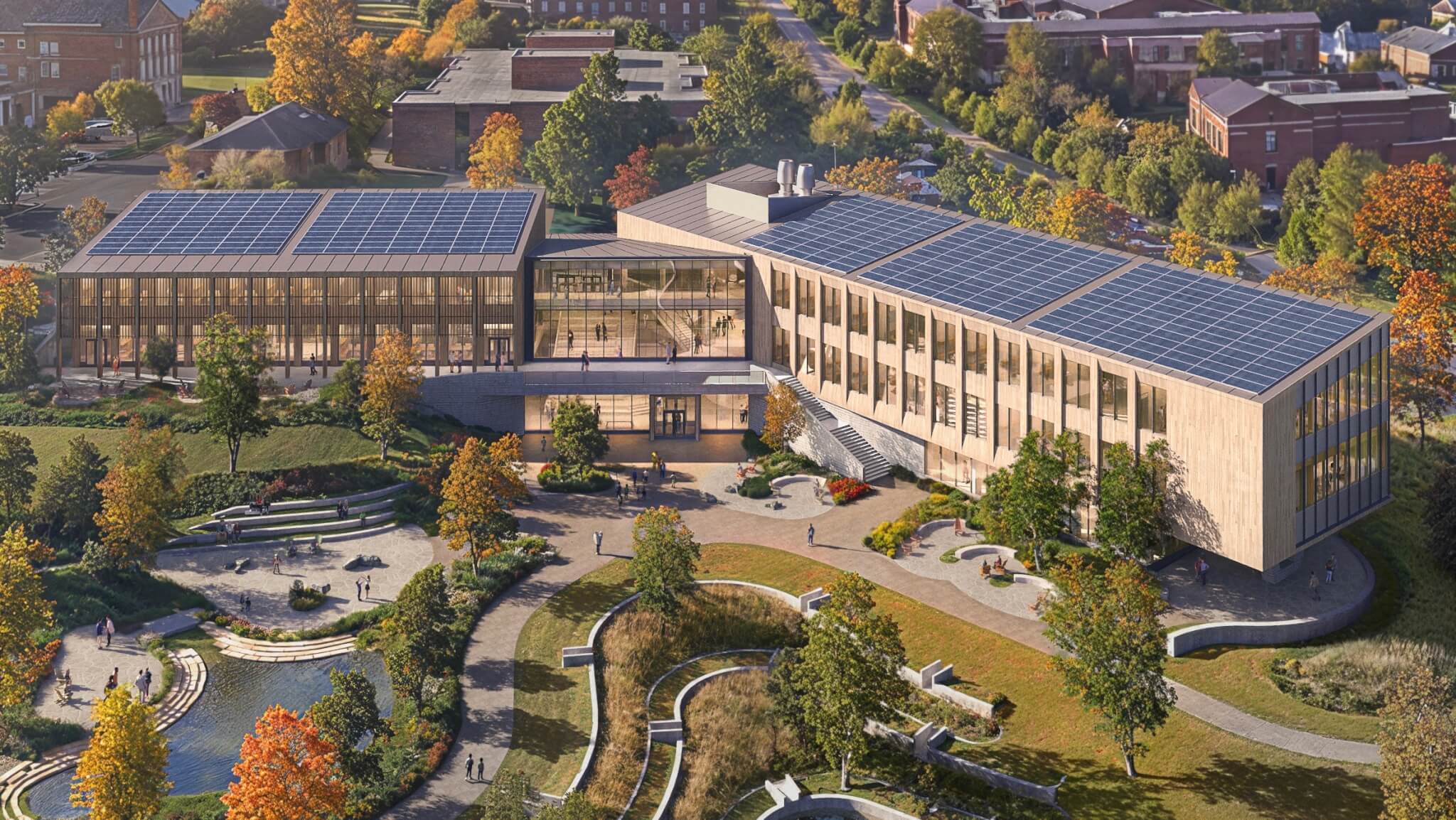
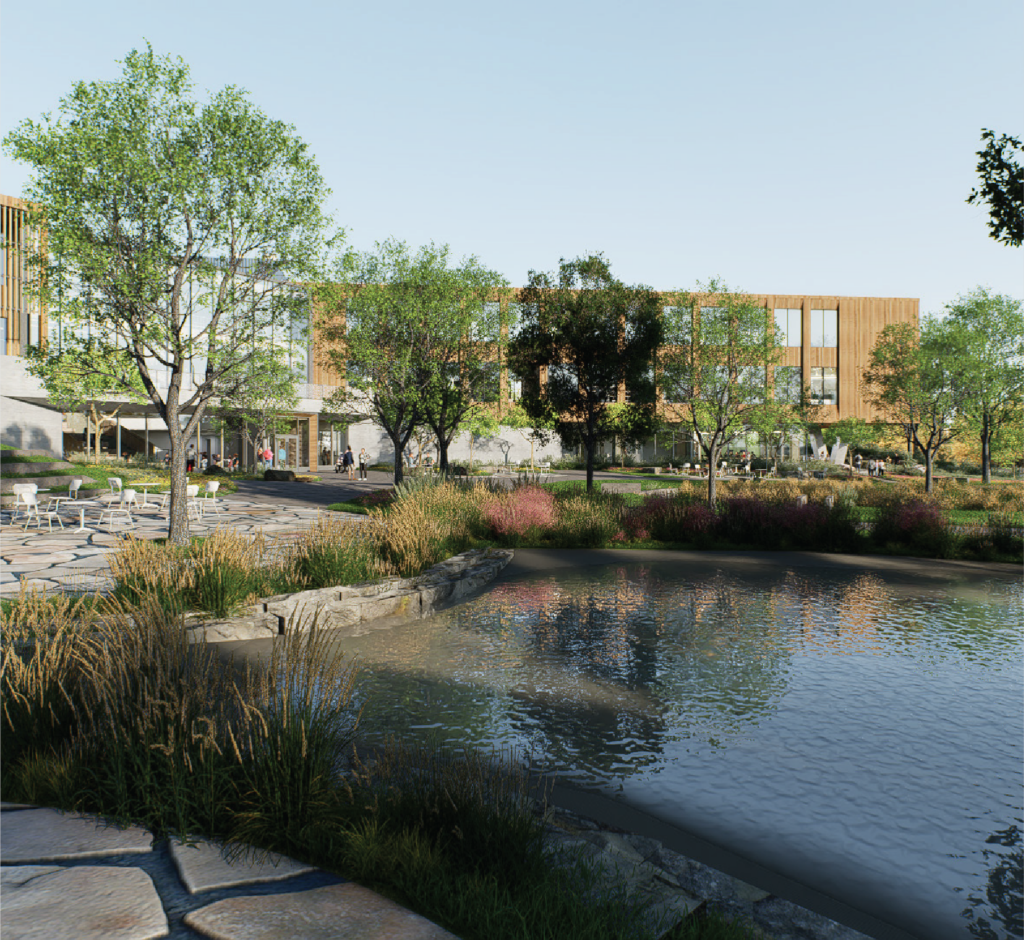
Two welcoming plazas mark the threshold between campus and community, drawing visitors inward along accessible pathways threaded with moments of discovery. Native plant communities and transitional ecotones map the ecological richness of the region, while constructed wetlands, grassed swales, and level spreaders make the movement of water visible, turning responsible infrastructure into an open-air curriculum. Along the northeast edge, gently curving precast walls step with the natural grade, forming an amphitheater for gatherings large and small in the shadow of the Smokies.
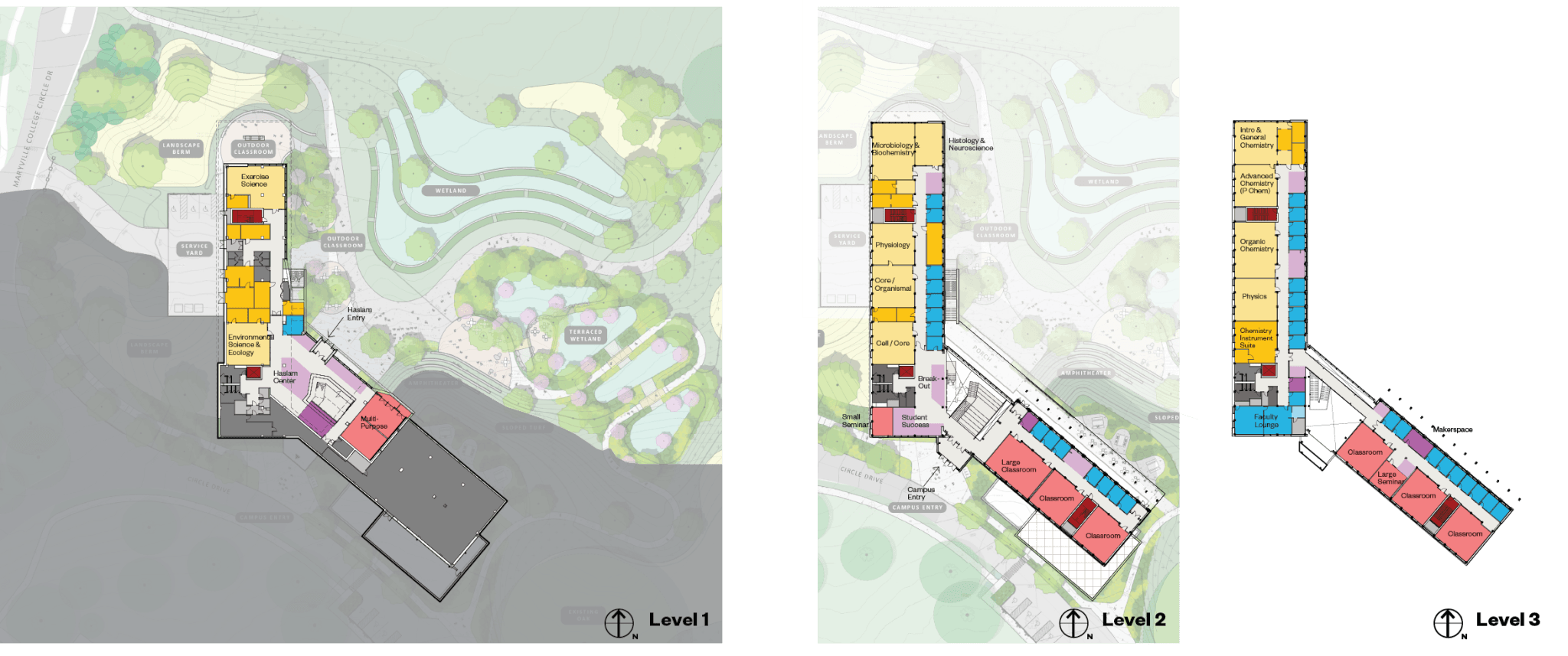
Planning at a Glance
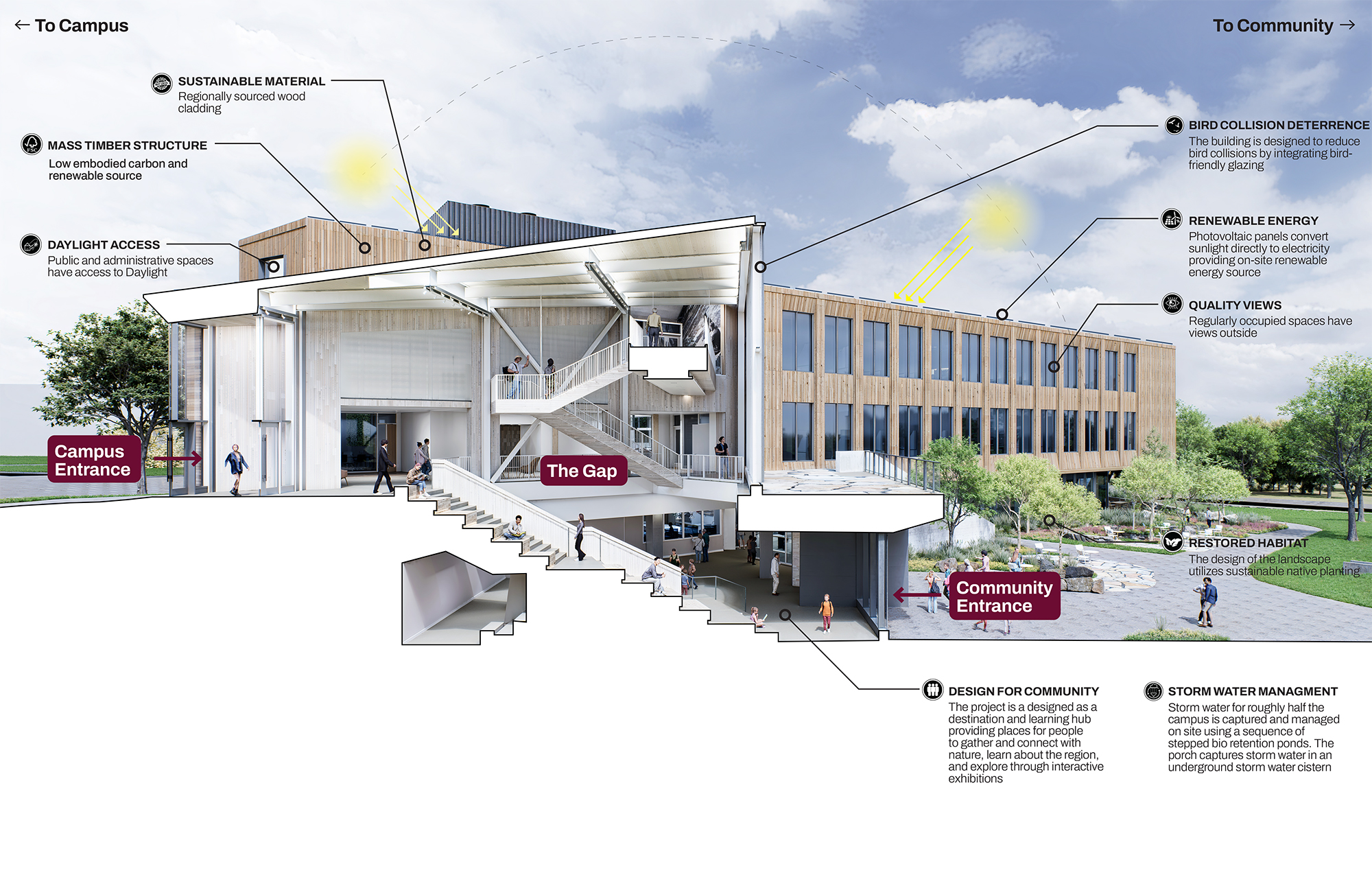
The building features three zones: the Cumberland Wing (labs), the Blue Ridge Wing (classrooms), and the Gap — a valley-like central public space connecting them. Teaching labs for Ecology & Environmental Science and Exercise Science occupy the lower, more public level adjacent to the Gap, showcasing research to all visitors.
Biology teaching labs are on level 2, chemistry labs on level 3. Faculty offices and collaboration spaces are dispersed throughout. Student-focused amenities include the Student Success Center near the campus entrance and the Maker Studio in the Blue Ridge Wing on level 3. The Gap serves as the building’s central collaboration hub. Its feature stair connects the community-oriented Haslam Center to campus teaching spaces, while a communicating stair and bridge link labs and classrooms on levels 2 and 3.
Sustainability and Conservation
The Institute will be a jewel of Southern Appalachia, honoring its rich natural environment through the lenses of conservation, resilience, and renewal. Regionally grown and sustainably harvested oak wood panels clad the building, while a heavy timber structure roots it in the region’s forested landscape—choices that are at once poetic and practical, reducing the carbon footprint while forging deep connections to the Southern Appalachian setting. A rooftop solar array further minimizes energy demands, and an innovative landscape manages stormwater runoff from nearly half the campus using vegetation and grading that represents the region’s varied ecotones. The Institute will rank among the most sustainable buildings in Tennessee—and above Community Entrance all, it will embody its mission, inviting students to use the land and the building itself as a living laboratory.
The Natalie Leach Haslam Center for Environmental Education
The Natalie Leach Haslam Center for Environmental Education inspires wonder in visitors of all ages by drawing them into the extraordinary biodiversity and natural history of Southern Appalachia and the Great Smoky Mountains. Museum-quality exhibits tell the story of the region’s landscapes and conservation efforts, while live propagation programs for hellbenders, bog turtles, brook trout, and imperiled native fishes connect visitors to real conservation work unfolding in partnership with local organizations and government agencies. Animals raised here are released back into their native habitats across the region.
The Haslam Center serves a broad and diverse audience, from the College community to lifelong learners to first-time visitors. At its heart is a signature K-12 program with an ambitious goal: bringing every third, seventh, and eleventh grader in Blount County through its doors each year, thus planting seeds of environmental stewardship in the next generation of Southern Appalachians.
The Tracy and Bill Frist Center for Appalachian Wellness and the Outdoors
Housed within the Alexander Institute, the Tracy and Bill Frist Center for Appalachian Wellness and the Outdoors advances a simple but powerful idea: that spending time in nature is central to human health, and that human and environmental well-being are inseparable. Through rigorous training, applied research, and lifelong learning, the Frist Center weaves nature and climate literacy into education for healthcare workers, fitness and health professionals, and the broader community. Its work cultivates empathetic leaders who understand health as something shaped not only by biology, but by people, policy, and the living landscape around them. In turn, the Frist Center empowers individuals to take action by advocating for nature-based solutions in their own communities and across the region, advancing human and environmental health to build a thriving Southern Appalachia.
The Center for Appalachian Land Conservation
The Center for Appalachian Land Conservation educates the next generation of land conservation leaders, as well as further empowers those already engaged in this vital work. For students, the Center provides an interdisciplinary curriculum, experiential learning, and research opportunities. For land conservation professionals, there are professional development and networking opportunities. The Center seeks to raise public awareness and engagement regarding land conservation practice and policy and fills existing educational gaps in the field of land conservation, thereby elevating such efforts across the region and serving as a national model for others.
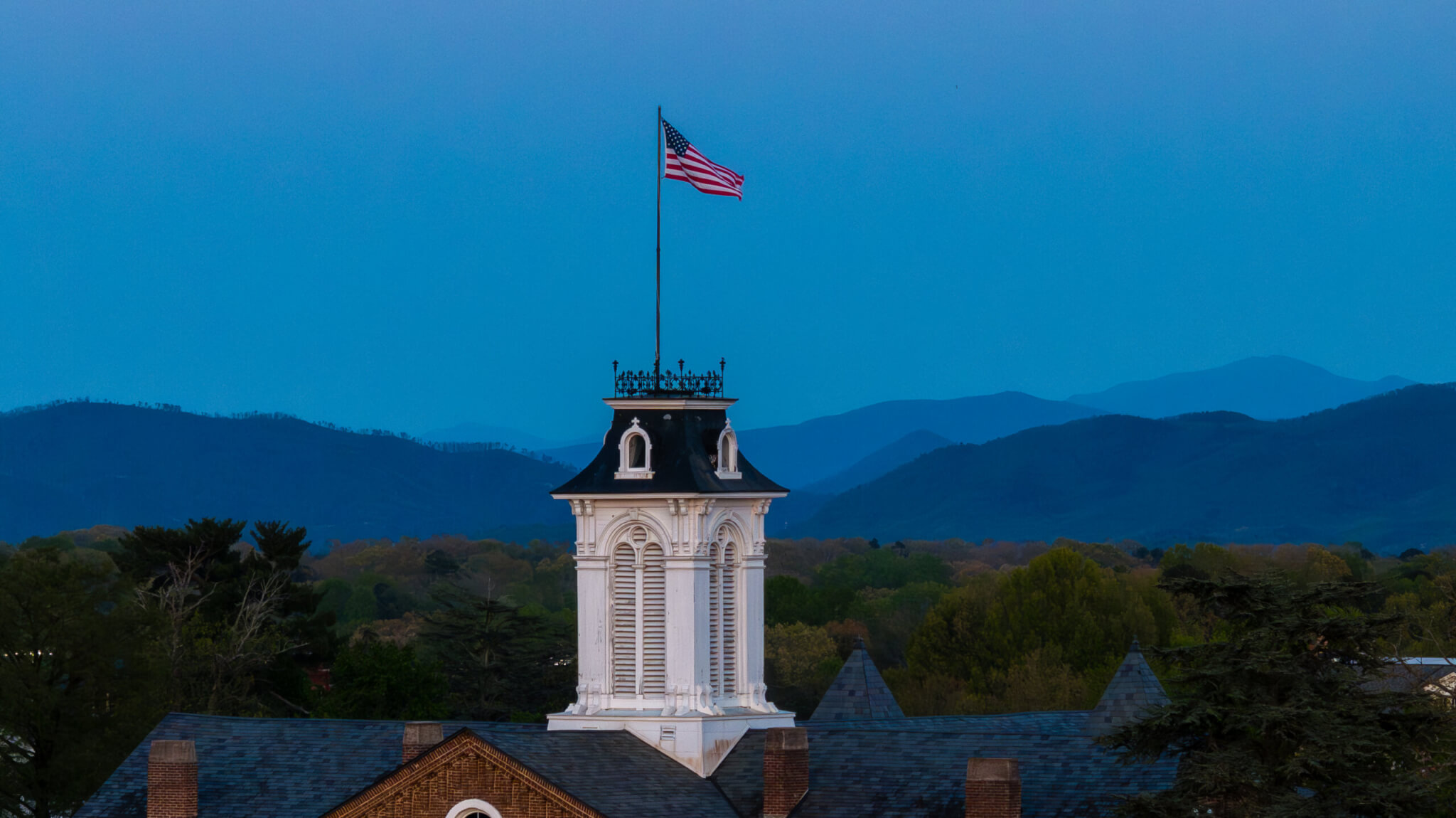
“Maryville College’s future is all around us, here in Southern Appalachia– the land, the air, the water, and of course, the people. Through the Alexander Institute, we will embrace this future– uplifting, preserving, and protecting this remarkable place for many generations to come.”
— Dr. Bryan F. Coker, Maryville College President
Get in Touch
For more information or to make a gift to the Alexander Institute, contact Maryville College’s Office of the President.
We welcome inquiries from prospective partners, educators, supporters, and community members interested in conservation leadership and the sciences.
Email us: president@maryvillecollege.edu
Call Us: 865-981-8102